
While climbing the slopes of Mount Everest, Penelope found herself trapped in a blizzard and all alone in her tiny survival tent. This might have bothered a normal person, but Penelope saw this as an opportunity to try something new. She took apart her camp stove, a lantern, and some miscellaneous parts she’d brought along with her, and began cobbling together something to keep her whole new adopted family warm despite the heavy snow and blowing winds.
A few hours of tinkering and a great deal of swearing later, Penelope had put together a device she called the Salamander. Not much larger than the camp stove that formed its base, the new invention could project heat in a twenty foot sphere around it without using any more fuel than the original stove. The dials on the device indicated the fuel pressure and how far it was projecting its heat umbrella, while the valves controlled the temperature.
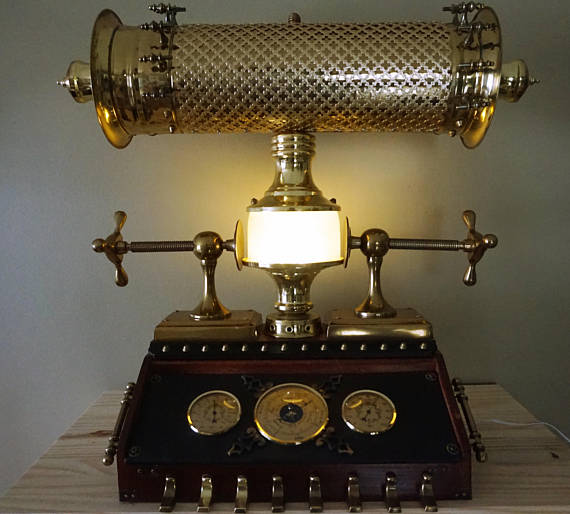
The device weighed about two and a half pounds without fuel, about four pounds fully fueled, and could be disassembled for travel. The Salamander could project its heat bubble for up to four hours at standard temperature with a full tank of fuel, and used regular kerosene as propellant. It had a wick inside that periodically needed changed, and it was fairly delicate, possessing only a single point of Body (i.e., it would break from any damage). It could increase the temperature in its sphere up to 35°C (95°F), though anything over about 21°C (70°F) would cause the fuel consumption to increase. Its lowest setting was 10°C (50°F), which cut fuel consumption in half. The radius of the heat bubble could also be adjusted, from as small as three feet all the way up to the full twenty foot radius.
 Shadows of the Crooked Cross